Leading Physical Therapy Specialist: The Real Reason Your Stomach Changed At Menopause And Nothing You Do Changes It Back
If you're through menopause, still training, still eating carefully, and your middle hasn't moved in years, read this short article before you try anything else.

Hello, I'm Dr. Marion Reese, a physical therapist in Minneapolis.
For 22 years my work has been the abdominal wall. Women after surgery, women after babies, and for the last decade, women coming through menopause.
They arrive in my clinic having already been everywhere else. They've seen their doctor. Often more than once.
And almost every one of them has been told the same sentence.
Eat better. Fewer calories. Exercise.
They come to me because they did all of that, and their middle didn't move.
From a waistband that stopped closing on a body that didn't gain weight.
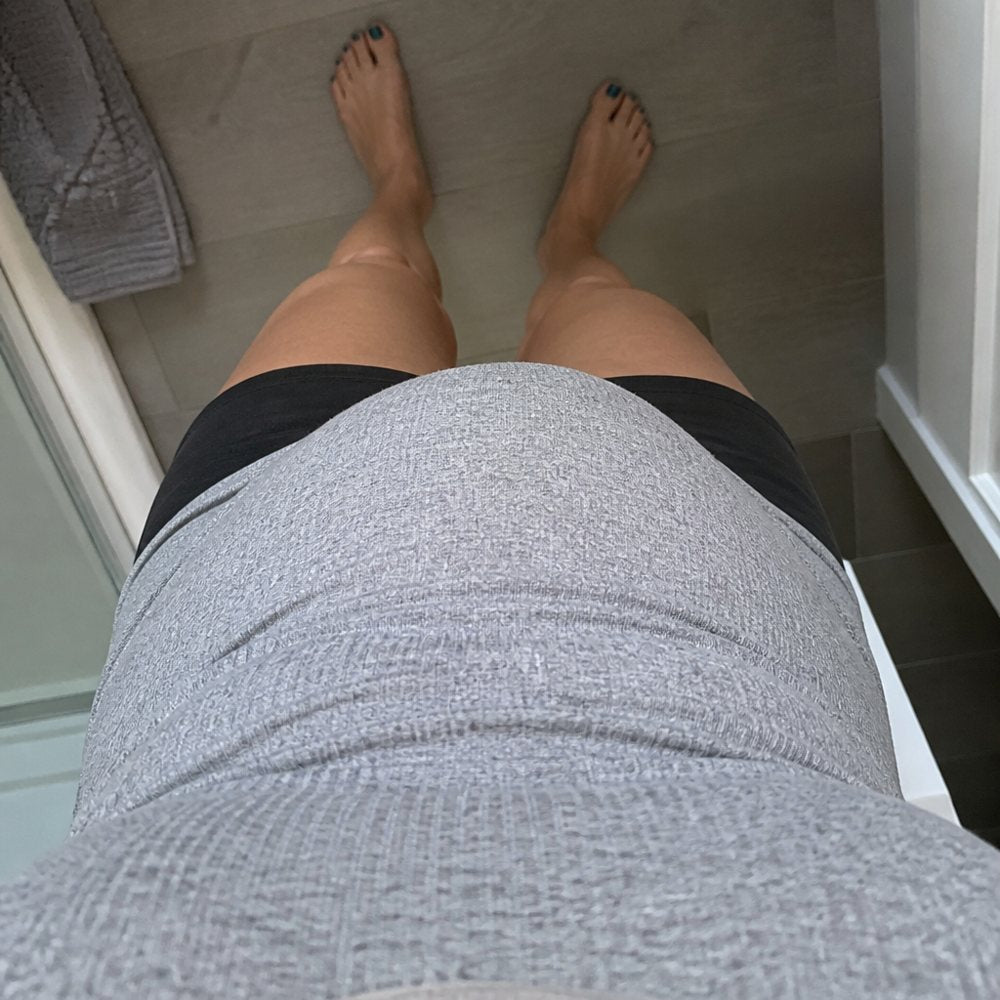
To a stomach that sits forward no matter how hard it's pulled in.
To women who train harder at 60 than they did at 40 and can't show it.
The Part Nobody Puts A Hand On
I want to tell you the thing that made me change how I work.
A patient came to me for a shoulder. She was 57, lifted 3 mornings a week, and had been through menopause 6 years earlier.
Halfway through her fourth appointment she stood up off the table and pulled her shirt down over her waistband. She did it without noticing she was doing it.
I asked her how long she'd been doing that.
She said she did it in the car too.
Then I asked her the question I now ask everyone.
Nobody had.
6 years of conversations across a desk, and not one person had examined the thing she was describing.
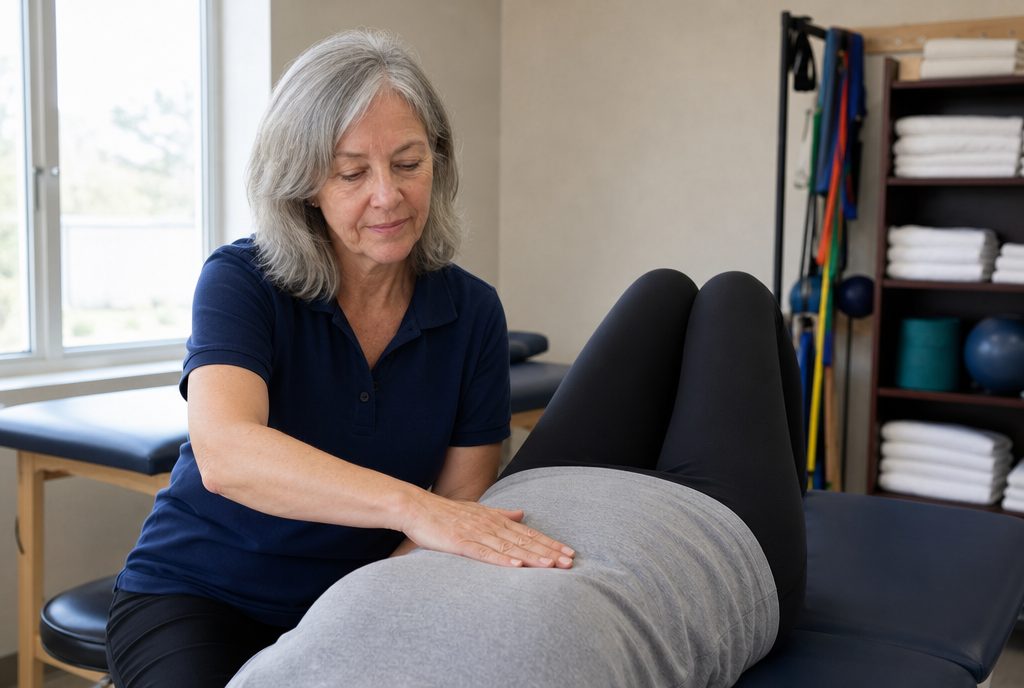
I had her lie down and I put my hand flat below her navel. I asked her to hold her stomach in as hard as she could.
Everything she did was the top layer. Underneath my hand, nothing moved at all.
That's not a willpower problem. That's a signal problem. And it has a name.
The Real Reason The Menopause Belly Will Not Move
What if I told you the change in your stomach isn't mainly about what you weigh, and never was?
It might sound strange, but it's measurable, and I measure it every week.
There's a muscle underneath the ones you train. It runs from your ribs down to your pelvis, behind everything else. Its clinical name is the transverse abdominis.
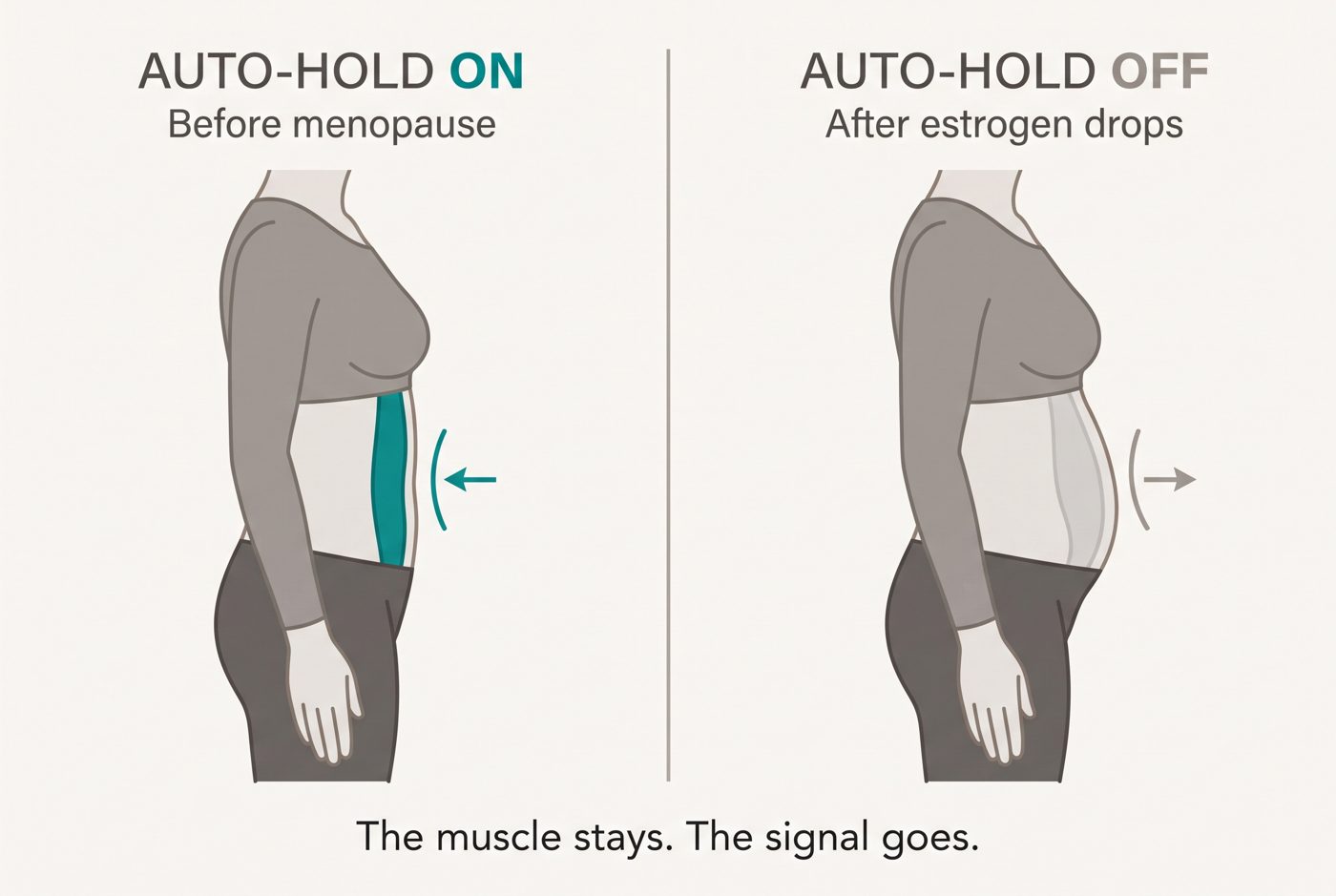
Its job is to hold your abdominal wall in for you, automatically, all day, without you ever thinking about it.
It did that for the first 50 years of your life and never asked your permission. In my clinic we call it your auto-hold.
Here's what almost nobody explains. That muscle doesn't fire because you decide it should. It fires on an involuntary signal, and estrogen is part of what keeps that signal running.
When your estrogen drops, the signal goes quiet.
The muscle doesn't go anywhere. It's still sitting there, intact. What goes is the switch.
And when nothing is holding the wall in from the inside, the wall sits forward. That's the shape you're looking at.
Most women blame the wrong thing
Almost every woman who sits in my treatment room blames the weight.
But look at what she actually reports. The scale didn't move. The size label didn't change. She trains more than she used to. And the middle changed anyway.
That's not what gaining looks like. That's what losing a support structure looks like.
I see the identical pattern after surgery. A patient comes off 6 weeks in a cast and the muscle underneath is intact, full-size, and simply won't answer when she tries to use it. Nobody's body got lazy. The line to it went quiet.
Menopause does that to the abdominal wall, and almost nothing in the standard conversation is looking for it.
Why everything you have tried did not reach it
This is the part that matters, and it's the reason women arrive in my clinic exhausted.
- Crunches and sit-ups train the muscles on top. They're the ones you can feel and contract on purpose. The one that went quiet sits underneath them and isn't reachable that way.
- Cutting your food does nothing to a signal. You can eat 1400 calories instead of 1600 and it won't switch a muscle back on. There's no plate small enough.
- Cardio and lifting are genuinely good for you and I'd never tell a woman to stop. But every one of those movements lands on muscle you can reach voluntarily. This is the one you can't.
- Shapewear does the holding for you, for one evening. The moment it comes off, nothing's changed underneath.
- Surgery removes something. It doesn't put a signal back.
That's why these all fail in the same specific way. They're aimed at fat, or at effort, or at the outside. The thing that changed is a muscle that stopped receiving its instruction.
What actually has to happen
If the involuntary signal is what went, then the fix has to do the one thing you can't do on purpose.
It has to contract that muscle directly, at a depth voluntary effort doesn't reach, often enough and for long enough that the muscle relearns to hold on its own.
That's not a diet. That's not a workout. It's a different category of intervention, and until recently it only existed inside clinics like mine.
The Method We Have Used On This Muscle For Decades

The technology is called EMS, electrical muscle stimulation. It sends a small pulse straight into a muscle and makes it contract the way it used to contract by itself.
It isn't new and it isn't exotic. I have one running in the next room most days of the week, on a quad that stopped answering after a knee replacement. It's standard rehabilitation equipment and it has been for a very long time.
What is new is that you no longer have to sit in a clinic to get it. Clinics charge by the session for this, and the sessions add up quickly.
A few years ago I started recommending a home version to the women in my practice. It's called encor.

It's a belt you wear for 20 minutes a day. You put it on, you turn it up until you can feel it working, and you carry on with your evening.
That's the entire protocol.
Check availability →90 days at home. Send it back if nothing changes.
What you should expect, honestly
I'd rather tell you this now than have you disappointed in 3 weeks.
This takes 2 to 3 months of doing it properly. Not days. And it's got to be turned up high enough that you actually feel the contraction, because a setting you can't feel isn't doing the work.
It doesn't replace anything you're already doing. Keep the training. Keep eating the way you eat. This sits underneath all of it, in the layer none of that reaches.
And it's not abs. I want to be blunt about that, because the category is full of belts promising them. If shocking your stomach gave people abs, everybody would have abs. This is about a wall being held in again, not about definition.
One more honest thing. A muscle that has been quiet 6 years takes longer to answer than one that has been quiet 6 months. It doesn't get worse in a way you'd notice week to week. It just takes longer the longer you leave it.
What a good result actually looks like
The category oversells this, so let me give you the honest ceiling.
Tighter through the middle at the same weight. Not fat gone. A wall that holds again, so the outline sits where it used to.
It works alongside what you already do, not instead of it. The women who get the most out of it are the ones who keep training.
And it isn't dramatic. If you're waiting for a transformation photo, this is the wrong tool, and you should know that before you start.
Not a smaller number on the scale. A different shape at the same number.
Do Not Just Take It From Me
I bought the belt in hopes to tighten my stomach area, not for weight loss. I have been using this almost daily for about two months and I have seem positive results. The front and side areas of my stomach seem tighter. I use this as an addition to my regular workouts. I have been able to work up to the highest level, but it takes time!
It's comfortable to wear and the EMS technology gives a noticeable muscle contraction, which feels like a light workout. While I haven't seen drastic changes on its own, I've definitely noticed some improved muscle tone when paired with regular exercise. It's not a magic fix it works best as a supplement.
Okay, I was skeptical at first buttt... I can honestly say that I see a little more definition on my tummy haha! I can wear it while I work, watch TV, or even while doing chores around the house! It's not a replacement for a full workout routine, for the best results I recommend using it after your regular workouts.
90 days at home. Send it back if nothing changes.
Who I Turn Away
I turn women away from this in my clinic most weeks. Here's who, and why, so you can decide before you've given it 3 months.
Not you if what you want is weight loss. It won't reduce fat and it isn't built to. If the number on the scale is the thing you want to move, you'll be disappointed, and you'll be right to be.
Not you if you want it done in 2 weeks. It's 2 to 3 months of daily use. I won't pretend otherwise, and a woman who starts expecting 2 weeks quits at 3 and never finds out.
Not you at all if you're pregnant, if you've got a pacemaker or any implanted electrical device, if you've got metal in your abdomen, or if you've had abdominal surgery recently. Ask your own clinician before you do anything. I mean that one more than the rest.
And it doesn't replace your doctor. She wasn't wrong that eating well and moving matter. She answered a different question than the one you were asking.
How To Use It
Put the belt on so it sits below your navel, across the muscle we've been talking about.
Turn the intensity up until you can clearly feel the contraction. Not painful. Unmistakable.
20 minutes. Once a day. I tell my patients to run it while dinner cooks so it stops being a thing they have to remember.
Then keep doing everything else you already do.
Check availability →90 days at home. Send it back if nothing changes.
You Have 90 Days To Decide, Not 90 Seconds
I don't send my patients toward anything they have to be sure about on day one.
encor comes with 90 days at home. That's 3 full months, which is deliberately the same length as the timeline I gave you above, so you can run the whole protocol properly and then decide.
If nothing changes, you send it back and you get every penny back. No questions asked.
That means the only thing you're actually risking is 20 minutes a day for a few months.
What I See When Women Decide To Wait
I'm not going to tell you something terrible happens if you do nothing, because it doesn't.
Here's what actually happens, and I've watched it enough times to be sure of it.
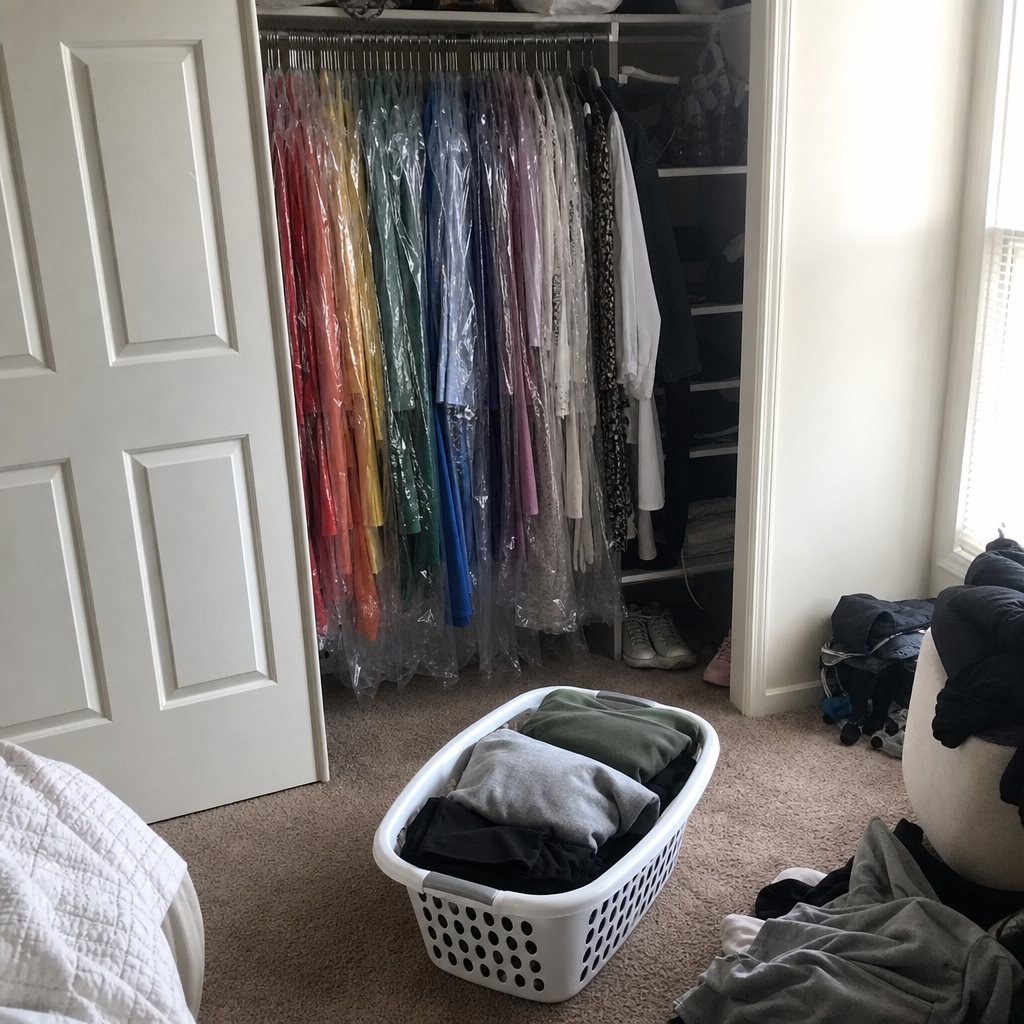
You keep going. You keep training, because you're the kind of woman who does. You keep eating carefully. You keep getting dressed twice in the morning and reaching past half your wardrobe for the things that hide it.
And in a year you're in the same place, except the muscle has been quiet a year longer.
You have already done the hard part. You did the work. Nobody ever showed you the layer the work couldn't reach.
Check availability →90 days at home. Send it back if nothing changes.
Dr. Marion Reese, DPT is a physical therapist in Minneapolis specializing in the deep abdominal wall.
This is an advertisement and not an actual news article.
MEDICAL DISCLAIMER: The information in this article is not intended as medical advice and is not a substitute for professional diagnosis or treatment. If you have a medical concern, consult your health care provider. Do not use this device if you are pregnant, have a pacemaker or other implanted electronic device, metal implants in the abdomen, or have had recent abdominal surgery. If you experience pain or discomfort during use, stop and consult your doctor.